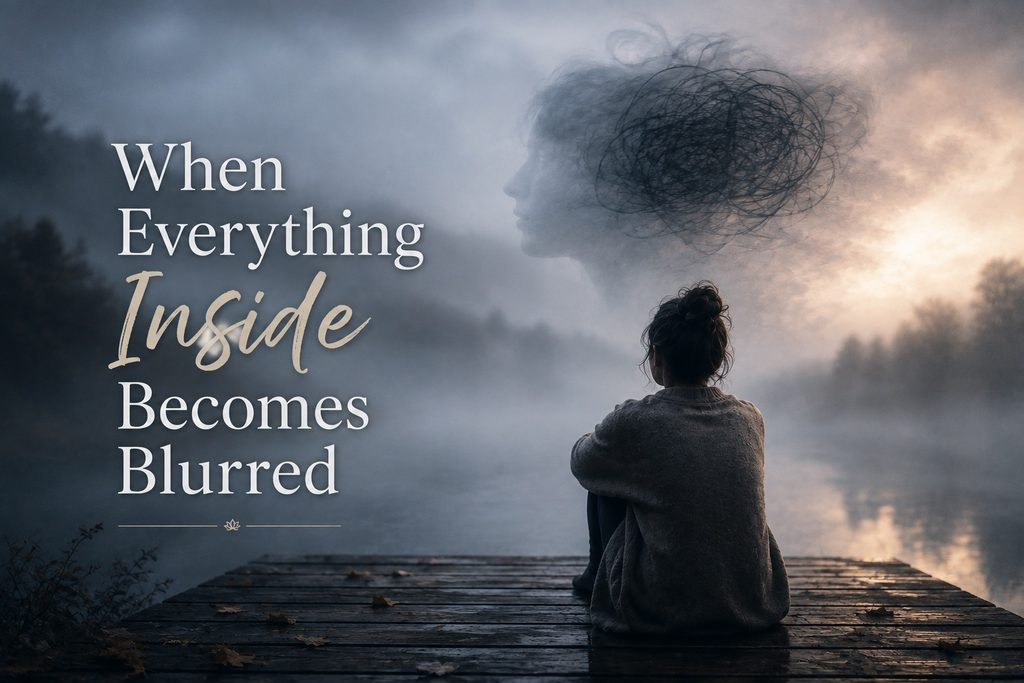
When Everything Inside Becomes Blurred
What are these emotions?
Why is there sometimes such intense turmoil within us that everything becomes foggy? No matter how much wisdom or self-knowledge you have, once these emotions overpower you, everything else seems to fade away.
And it is such a turmoil that, apart from you, no matter how much someone wants to, they cannot really see its depth.
On a surface level, we share things with others to let them out. We talk, explain, cry, write, or simply sit with someone hoping that somehow it will make us feel lighter. And perhaps it does, to some extent. But do we ever really succeed in expressing the full depth of what is happening within us?
Sometimes emotional depth becomes so profound that you simply feel caught in it.
And perhaps, eventually, no one can sort through it better than you can yourself.
The Fog Does Not Stay Forever

Whenever you feel like this, think of it as a foggy winter morning.
Everything seems unclear. You cannot see very far ahead. Things that are actually there become blurred, and for a while, the fog feels like the entire reality.
But then the sun begins to rise.
Slowly, the fog starts disappearing, and things become visible again. Nothing necessarily changed underneath it—the fog simply prevented you from seeing clearly for a while.
Maybe emotions are sometimes like that too.
Give yourself a little more time. Just hold on to yourself. What feels overwhelmingly real in this moment may look very different once the emotional intensity begins to settle.
Science also tells us that when emotions become intense, they can temporarily overpower our ability to think calmly and logically. It is almost as though, at that moment, the emotional systems of the brain become louder than the areas involved in reasoning, perspective and regulation, such as the prefrontal cortex.
Anyway, let’s not get too technical.
The point is to acknowledge your emotions.
They are real—as real as your existence. So feel them.
And perhaps that is a good thing too, yeah? Because that is part of what makes us human. The aim is not necessarily to get rid of emotions, but to learn how to understand them and direct them in the right direction. And perhaps that is what gradually helps us nurture and shape our personality.
Haven’t we all heard things like, “No pain, no gain”?
Difficult emotions can become a place from which we learn something and grow. After all, some of our deepest learning comes from a big mess.
Where There Is Connection, There Will Be Expectations

Here, “learning” can mean something completely different for everyone.
But then comes another interesting part of human emotions—expectations.
Wherever there is an interaction between two brains—or, let’s simply say, wherever there is an interaction between two human beings—expectations are bound to arise.
It is part of human nature.
And we cannot exactly separate ourselves from people and live somewhere completely disconnected from everyone, can we? We have to live here. We have to interact. We have to love, care, attach, trust, build relationships and emotionally connect with people.
And somehow, we also have to protect ourselves from getting hurt.
Yahan rehna bhi hai aur bachna bhi. Dono kaise mumkin ho bhala?
And isn’t it true that the deeper the emotional connection, the greater the expectations tend to become?
Of course they do.
That is why parents have expectations from their children, and children from their parents. Husbands and wives expect things from each other. Friends expect things from friends.
The stronger the emotional connection, the more silently those expectations seem to grow.
After all, have you ever expected the same things from some random person simply walking past you on the street?
Probably not.
We expect from those who somehow matter to us.
So perhaps expectations themselves are not the problem. They are almost an inevitable part of human connection. The real question is: what happens within us when those expectations are not met?
Perhaps the Direction Is Inward
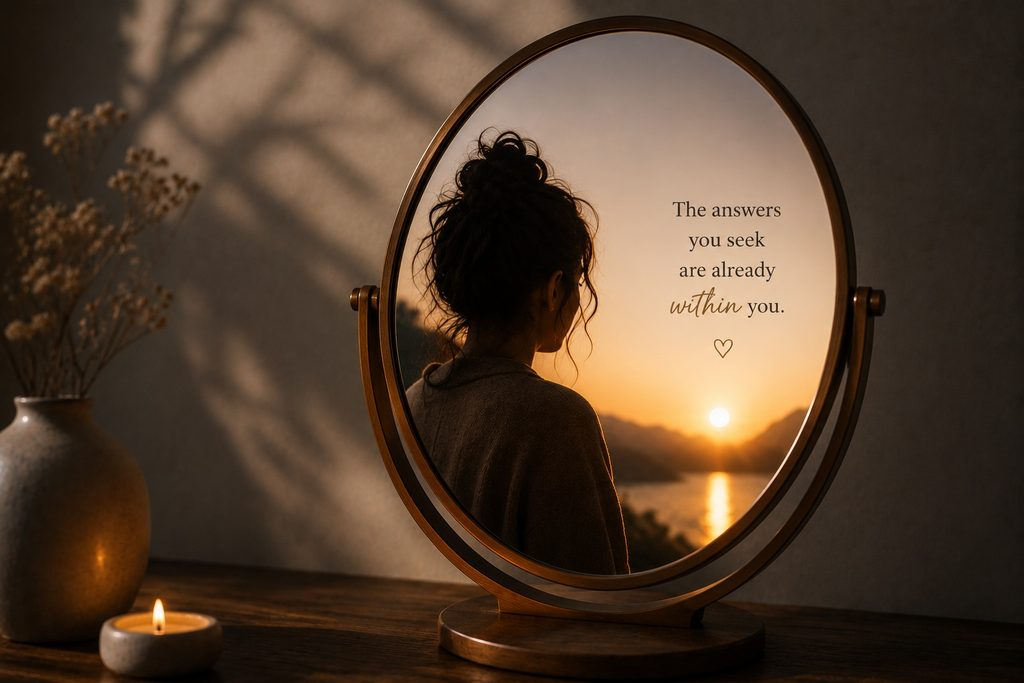
The solutions we often keep searching for out there may actually be somewhere within us.
We can question another person’s behaviour, but can we ever completely know what is happening inside their mind? Can we truly control how another person thinks, feels, responds, loves, cares, or behaves?
Probably not.
But we can question our own thoughts.
Our own expectations.
Our own emotional reactions.
And perhaps that is where some of the real work begins.
If blaming the situation or another person is the only thing that settles us down, then perhaps there is still room for deeper self-evaluation.
But if, somewhere in the middle of all that emotional turmoil, we can begin asking ourselves:
What exactly was I expecting?
Why was I expecting it?
Why did this affect me so deeply?
Was I expecting someone else to think, feel, or respond the way I would?
Then perhaps we are beginning to look in the right direction.
It does not mean that another person’s behaviour was right. Nor does it mean that we should accept everything people do to us. It simply means recognising that their behaviour belongs to them, while understanding our emotional response belongs to us.
And that is perhaps where the solution starts moving inward.
Not by denying the emotion.
Not by pretending that it does not hurt.
But by acknowledging it, feeling it, understanding where it came from—and eventually learning something about ourselves through it.
Maybe emotional wisdom is not about reaching a point where nothing affects you.
Maybe it is about knowing that sometimes the fog will come, your vision will become blurred, and for a while you may even lose your sense of direction—
but still remembering that fog is weather, not the sky.
The sun is still there.
Give it some time.