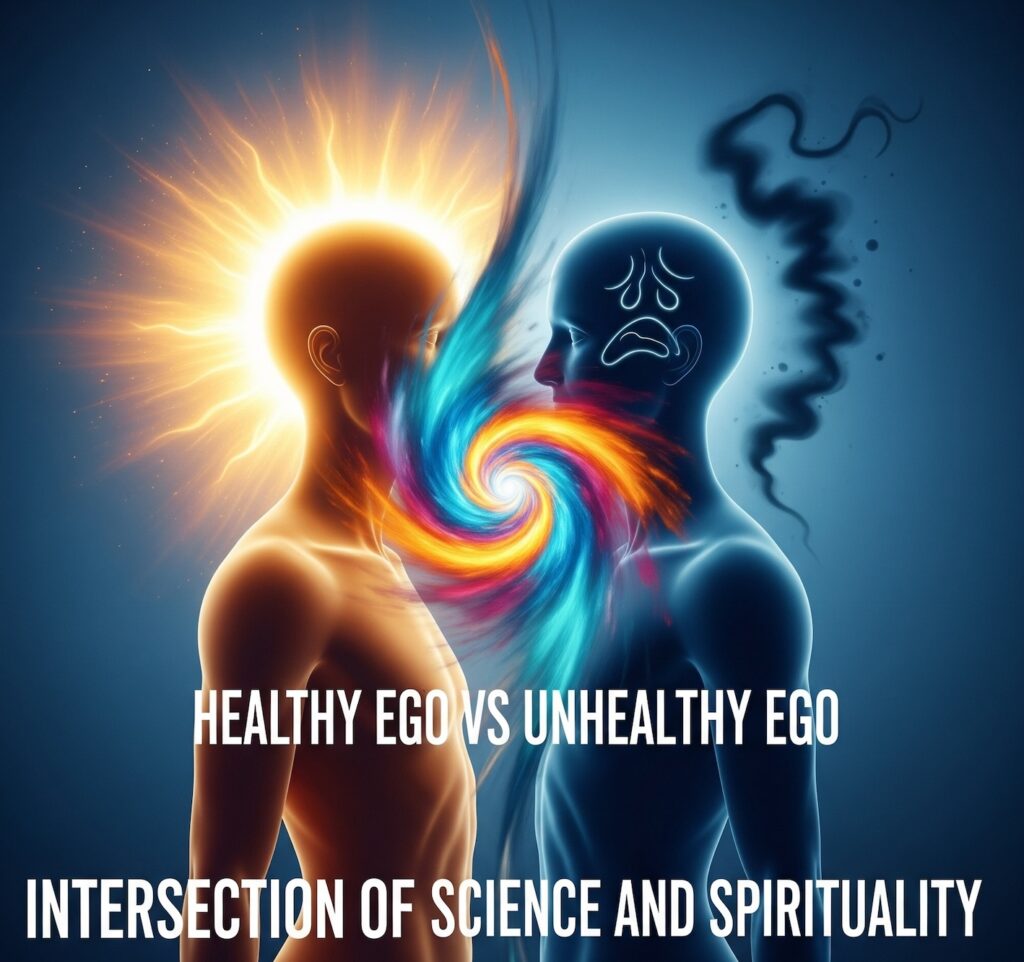
Two Approaches to Truth – Science vs. Spirituality

Science and spirituality both seek truth, yet they approach it from different directions. Science relies on evidence, measurement, and repeatability. Spirituality, in contrast, turns the gaze inward, where the only evidence is personal experience.
Science has explored the far reaches of space—the galaxies, planets, and cosmic phenomena—as well as the intricacies of the human body and mind. Spirituality, however, reminds us: you are the universe.
The Journey Inward – Self-Understanding as a Universal Key

When you begin to truly understand yourself—your thoughts, emotions, behaviours, and the constant questioning that drives you—you start peeling back the layers of illusion. This journey is even richer when you understand how human evolution has shaped who we are today.
If you’d like to explore that foundation first, I recommend reading these articles before continuing:
——–> The Power of Stories: How Human Evolution and Imagination Shape Our Lives
——–> The Brain Machine and Processing
——–> Beyond Words: The Biological Roots of Thought and Perception
Together, they offer deeper insights into the origins of our thinking, perception, and imagination—key pieces of the puzzle when seeking self-understanding.
Once you have this context, you’ll see how each of us is part of a larger, unfolding pattern in the universe. The body itself is part of this material process. Thoughts, too, arise from it—but they are not the whole of reality.
Spiritual Clarity Through Scientific Reasoning
Approaching spirituality with scientific reasoning can help you transcend the pull of thoughts. This doesn’t mean thoughts disappear—just as breath persists as long as the body is alive, thoughts will persist as long as the brain exists. But you begin to see beyond them, recognising that there is something deeper than thought itself.
The Human Edge – Survival Through Thought and Strategy
In nature, the first law is survival. All beings—human, animal, reptile, insect—are wired to endure. Humans, with their capacity for thought, have a unique advantage: we don’t just fight, we fight strategically.
Once, “fighting” meant taking up arms in physical battle. Today, it often means confronting inner battles—fears, doubts, insecurities—challenges that have existed since the dawn of our species, but which we only recently began to understand through the lens of psychology.
Healthy Ego – The Psychological Necessity of Self-Worth

Modern psychology highlights the importance of regularly engaging the prefrontal cortex—the brain’s centre for planning, decision-making, and self-control. In everyday life, this means doing meaningful, productive work that reinforces your sense of value.
When you feel you are contributing to society—whether through your profession, art, charity, or nurturing relationships—you develop what psychologists call a healthy ego. This is a balanced sense of self-worth, rooted in confidence, self-respect, and the ability to navigate challenges without depending on external validation.
Research in positive psychology shows that high self-esteem correlates with lower rates of depression and anxiety (Orth & Robins, 2014) and supports prosocial behaviours and academic success (Donnellan et al., 2005). Without a healthy ego, the mind can fall into negative cycles—much like an untended garden that becomes overrun with thorns.
Non-Ego in Spirituality – The Pursuit of Zero
In spirituality, however, the ultimate aim is to reduce the ego to zero. Even a healthy ego, while beneficial in worldly life, is seen as an obstacle to the deepest spiritual realisation.
Ego-to-zero doesn’t mean erasing the self—it means recognising that all material things, including the self, are temporary. When the “thread of attachment” to jobs, possessions, and even identity itself snaps, life’s illusions become transparent.
This principle, central to traditions like Buddhism, Advaita Vedanta, and Christian mysticism, is about humility, interconnectedness, and liberation from self-centred desire. As Eckhart Tolle puts it: “The moment you realise you are not your thoughts, you begin to awaken.”
Illusions and Enlightenment – Where the Paths Meet
Many imagine that achieving spiritual awakening will erase all problems. In reality, it changes perspective, not circumstances.
Science encourages the development of a healthy ego; spirituality, the quieting of ego. They may seem opposed—one striving for growth, the other for dissolution—but at their core, they meet. True spirituality’s “full stop” is not the end of action, but the end of illusion. You still work, love, and live—yet you do so with awareness and without being ruled by the ego.
In this way, a person rooted in spiritual truth will never slip into an unhealthy ego.
Unhealthy Ego: When Self-Worth Turns Toxic
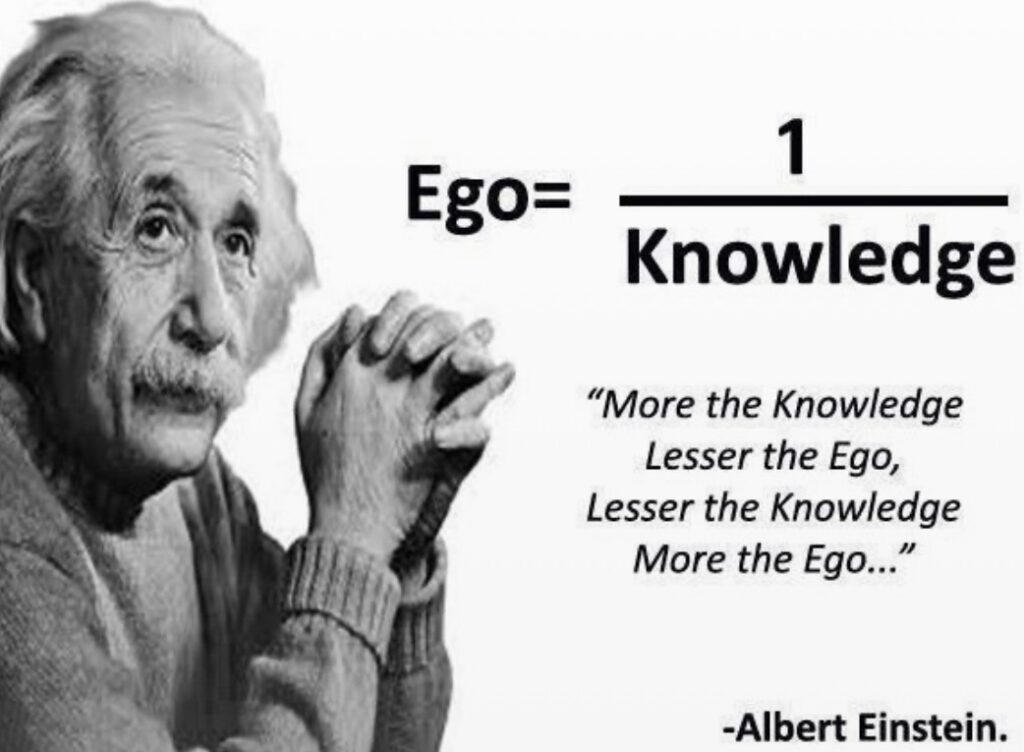
An unhealthy ego is built on external validation, breeding jealousy, comparison, and insecurity. It traps individuals in cycles of measuring themselves against others, fuelling resentment and dissatisfaction.
Social comparison theory (Festinger, 1954) explains that upward comparisons—measuring yourself against those perceived as better—often lead to inadequacy. Studies show that social media intensifies these effects, amplifying envy and lowering self-esteem (Vogel et al., 2019).
As Theodore Roosevelt famously said, “Comparison is the thief of joy.” Freud echoed the warning: “The ego is not master in its own house.” When unchecked, the unhealthy ego can dominate thoughts and actions, undermining both relationships and personal peace.
Final Thoughts – The Balanced Path
Carl Jung summed up the journey well: “The first half of life is devoted to forming a healthy ego, the second half is going inward and letting go of it.”
The path to fulfilment lies not in choosing between science or spirituality, but in weaving them together—first cultivating a healthy sense of self, then transcending it to realise the deeper truths of existence. In this balance, we find meaning, resilience, and a connection that extends far beyond the self.